

West Africa is facing one of its most turbulent moments in recent history. After months of growing political tension, repeated coups, rising insecurity, and worsening humanitarian conditions across multiple countries, the Economic Community of West African States (ECOWAS) has officially declared a state of emergency across the entire region.
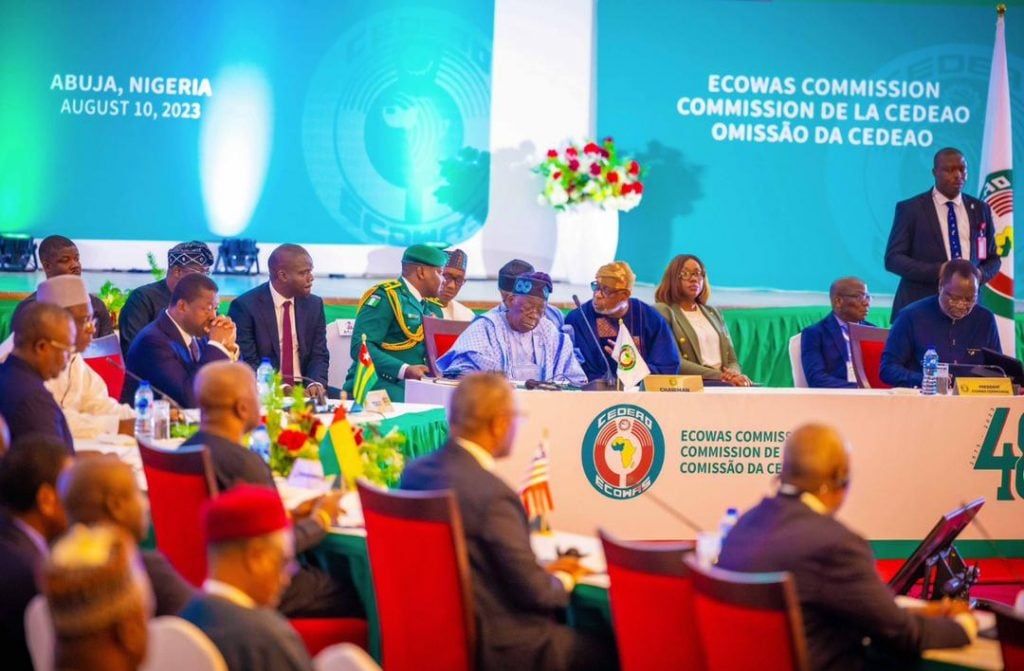
The announcement was made by Dr. Omar Alieu Touray, President of the ECOWAS Commission, during the 55th Session of the Mediation and Security Council at ministerial level held in Abuja, Nigeria. His address delivered a rare and urgent warning that the region is in grave danger, democracy is weakening, and security threats are expanding faster than governments can respond. This declaration marks a turning point in West Africa’s collective struggle with instability and signals that ECOWAS now recognizes the situation as a full-blown regional crisis requiring immediate action, shared responsibility, and firm political commitment.
In his opening remarks, Touray did not hide the seriousness of the regional situation. For the first time in years, ECOWAS openly admitted that West Africa’s stability is deteriorating at a dangerous pace. He explained that according to the Commission’s risk assessments, most member states now fall under the “high-risk” category. This classification is based on a combination of increased military interventions, breakdowns in political transitions, growing electoral disputes, the expansion of terrorism and armed groups, the spread of cross-border criminal networks, rising foreign interference, worsening humanitarian challenges, and a loss of public trust in democratic institutions.
Touray stressed that these overlapping threats have created a complex crisis that ECOWAS can no longer address through ordinary diplomatic procedures.
His declaration did not shock political observers, as West Africa has experienced more coups and attempted coups in the past three years than any other region of the world. Several countries remain under military rule, while extremist attacks continue to displace millions. However, this was the first time ECOWAS officially acknowledged the situation as a regional emergency requiring comprehensive and coordinated intervention. Touray warned that the trend of coups, if left unchecked, could push West Africa back to the political atmosphere of the 1980s and 1990s when military takeovers were common and democratic processes were fragile.
One of the major factors driving the state of emergency declaration is the resurgence of military coups. Since 2020, countries such as Mali, Burkina Faso, Niger, Guinea, and most recently Guinea-Bissau have witnessed military interventions that have either removed elected governments or disrupted political order. Even historically stable states have not been spared, as demonstrated by the recent attempted coup in Benin. Touray noted that these developments not only weaken ECOWAS’ credibility but also threaten regional cooperation because some juntas have withdrawn or threatened to withdraw from ECOWAS, accusing the bloc of political interference.
He cautioned that the continued rise of military regimes poses a direct threat to the region’s democratic foundations.
Closely connected to the surge of coups is the problem of delayed or manipulated political transitions. Touray highlighted Guinea as one of the most concerning cases, where the ruling junta stands accused of adjusting transition guidelines in a bid to convert military power into civilian rule. Similar patterns have emerged in several other states where military leaders promise swift transitions but later extend timelines or revise political arrangements. ECOWAS views this as a major danger to democratic integrity. Prolonged transitions, Touray explained, often create power vacuums that extremist groups, criminal networks, and armed factions exploit, further destabilizing already fragile states.
Elections, which should ideally strengthen democratic participation, have instead become triggers for political tension and violence across the region. Touray expressed concern that several recent and upcoming elections are marred by disputes, including exclusion of major opposition candidates, contested results, allegations of ballot interference, violent suppression of dissent, legal controversies surrounding eligibility, and campaigns fueled by disinformation. He emphasized that unless electoral processes become more inclusive, transparent, and credible, the region may soon face a new wave of election-related instability that could undermine democratic progress.
Touray also addressed the rapidly evolving security landscape, describing how terrorist organizations, armed groups, bandits, and separatist factions now operate across vast areas of West Africa. Countries such as Nigeria, Burkina Faso, Mali, Niger, Benin, Togo, Ghana, and Côte d’Ivoire are grappling with growing insecurity as national armies struggle to contain insurgents. The cross-border nature of these groups makes the crisis even more complex. Touray warned that these armed elements do not recognize national boundaries and therefore require coordinated regional military and intelligence cooperation. According to him, without joint action, these groups will continue expanding into new territories.
Beyond the political and security challenges, West Africa is also confronting a severe humanitarian crisis. Fresh data from the UNHCR shows that 7.6 million people across the region are currently displaced, of whom 6.5 million are internally displaced within their own countries. Nigeria, Mali, Burkina Faso, and Niger remain the most affected, while Niger, Togo, Mali, Nigeria, and Côte d’Ivoire host large numbers of asylum seekers fleeing violence, persecution, or instability. Touray explained that the displacement crisis is worsening faster than humanitarian agencies can respond, with climate change, poverty, and rising food insecurity worsening the suffering of millions. He insisted that the humanitarian emergency must become a top regional priority.Given the scale of the crisis, Touray called on ECOWAS member states to strengthen regional unity and support collective approaches to security, governance, and humanitarian assistance.
He emphasized that no single country can effectively combat terrorism or withstand instability alone. He added that a nation’s internal collapse affects the entire region, and democratic systems cannot thrive when coups become normalized. Touray encouraged leaders to intensify collaboration, uphold constitutional principles, and reinforce mechanisms that protect democratic order. He also proposed more frequent meetings of the Mediation and Security Council, stronger sanctions against unconstitutional changes of power, more consistent monitoring of political transitions, enhanced joint security operations, improved humanitarian coordination, and robust protection of electoral processes.
Sierra Leone’s Minister of Foreign Affairs, Timothy Kabba, who chairs the ECOWAS Council of Ministers, supported Touray’s concerns and emphasized the urgency of decisive action. Kabba warned that West African citizens are increasingly losing patience with governments and regional institutions that deliver promises without implementation. He described the recent coup in Guinea-Bissau and the attempted coup in Benin as clear signs that West Africa’s democracies are more vulnerable than many assume. Kabba also highlighted Sierra Leone’s role in engaging with Guinea-Bissau following its recent crisis, where a high-level delegation was sent to mediate between the military and political leaders. He urged ECOWAS to ensure that the Abuja meeting produces concrete solutions that strengthen governance, protect elections, and restore stability.
The ministerial session precedes the forthcoming ECOWAS Heads of State and Government Summit, which is expected to attract intense public interest. During this summit, regional leaders will be required to review and approve the emergency declaration, develop new strategies for addressing coups, refine rules governing political transitions, strengthen regional cooperation against terrorist networks, address humanitarian needs, and reinforce unity within ECOWAS. Political analysts argue that this summit may be one of the most consequential gatherings in recent years. If ECOWAS fails to take bold action, the region could face more coups, further disputed elections, worsening displacement crises, growing extremist influence, and deeper socio-economic instability.
With multiple political crises unfolding simultaneously, millions displaced by conflict, and rising insecurity across national borders, West Africa is standing at a difficult crossroads. The region now faces a choice between strengthening cooperation and transparency or risking deeper instability. Those advocating reform believe that if ECOWAS reinforces democratic institutions, improves election integrity, and enhances its security coordination, the region may begin to regain stability and public trust. However, if the current challenges continue to intensify, the consequences could be severe for democracy, peace, economic development, and regional cooperation.
For decades, ECOWAS has been viewed as one of Africa’s strongest defenders of democratic norms, constitutional order, and regional solidarity. Yet recent setbacks, particularly the wave of military takeovers, have raised questions about the bloc’s effectiveness and long-term credibility. By declaring a regional state of emergency, ECOWAS is signaling that the situation can no longer be managed through routine diplomacy. The decision reflects a recognition of reality as well as a call for urgent collective action.
Following the declaration, ECOWAS security bodies are expected to meet more frequently to monitor political transitions, election readiness, and security hotspots. New regional security strategies may be implemented, including joint military missions, enhanced intelligence sharing, and strengthened border-security initiatives. The bloc may also introduce stricter sanctions on military regimes, especially those unwilling to commit to clear and time-bound transitions back to democratic governance. Humanitarian support frameworks are expected to be expanded to assist countries hosting large displaced populations. Ultimately, the Heads of State Summit will determine the speed and scope of ECOWAS’ next steps.
West Africa is entering a defining moment. ECOWAS’ decision to declare a regional state of emergency represents a dramatic shift in how the bloc views the crisis. After years of issuing warnings, negotiating diplomatic paths, and attempting mediation, the organization now acknowledges that the region’s instability has reached a critical level that demands bold action, strong unity, and shared commitment. Touray summarized the urgency of the situation by stating that West African leaders owe their citizens peace, security, and stability, and cannot allow the region to drift into chaos. Whether ECOWAS can fulfill this promise — and whether member states will unite behind its efforts — will significantly shape the future trajectory of West Africa.