
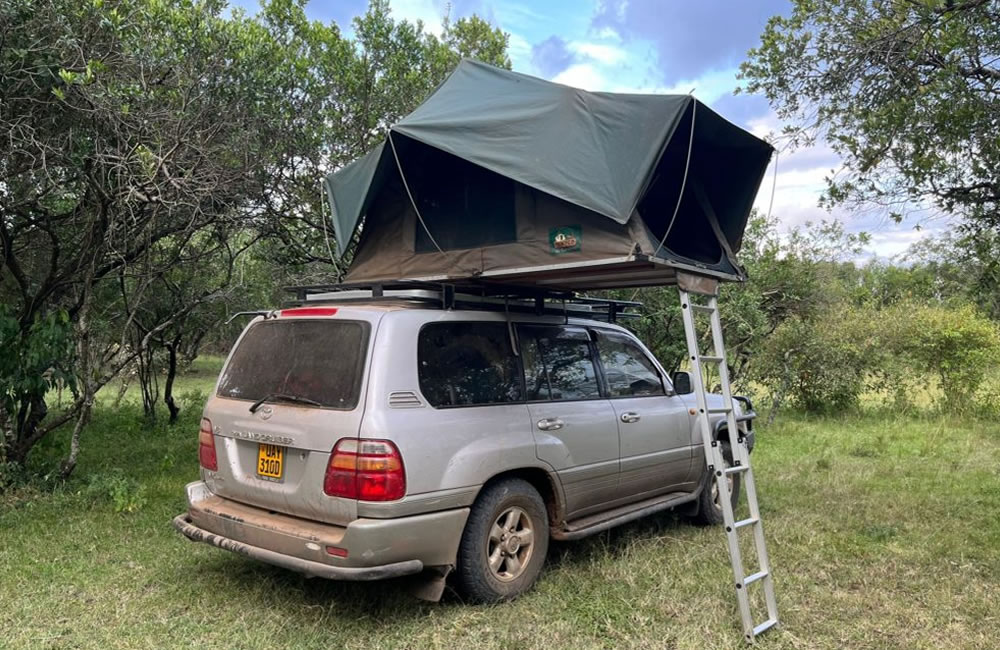

Exploring Uganda with a rooftop tent vehicle with 4×4 vehicle offers an adventurous and flexible way to experience the country’s stunning landscapes and wildlife. This method of travel combines the freedom of self-driving with the comfort and convenience of camping. From the lush rainforests of Bwindi to the savannas of Queen Elizabeth National Park, a rooftop tent allows you to immerse yourself fully in Uganda’s natural beauty. Here’s a comprehensive guide to make the most of your rooftop tent adventure in Uganda.
- Preparing for Your Rooftop Tent Adventure
1.1. Renting a Rooftop Tent Vehicle
- Rental Agencies: Several rental companies in Uganda offer vehicles equipped with rooftop tents. Choose a reputable agency that provides well-maintained vehicles with comprehensive insurance.
- Vehicle Type: Opt for a 4×4 vehicle to handle Uganda’s diverse terrain, including rough roads and off-road tracks. Ensure the vehicle is equipped with a rooftop tent, as well as essential camping gear like cooking utensils, a cooler, and a portable toilet if needed.
1.2. Packing Essentials
- Camping Gear: In addition to the rooftop tent, pack camping essentials such as sleeping bags, cooking equipment, and camping chairs. Many rental companies include these items, but confirm their availability in advance.
- Clothing and Gear: Pack lightweight, moisture-wicking clothing for hot days, warm layers for cooler evenings, and rain gear. Don’t forget sturdy hiking boots, a hat, sunglasses, and insect repellent.
- Navigating Uganda’s Scenic Routes
2.1. Route Planning
- Key Destinations: Plan your route to include Uganda’s major attractions, such as Bwindi Impenetrable National Park, Queen Elizabeth National Park, Murchison Falls, and Lake Mburo National Park. Include some off-the-beaten-path locations for a more immersive experience.
- Map and Navigation: Use Google Maps or a similar GPS app to plan your route. Download offline maps for areas with limited mobile coverage. Consider using local maps and advice for detailed guidance within national parks.
2.2. Road Conditions
- Main Roads: Major roads connecting cities and national parks are generally in good condition, though they may be busy.
- Park Roads: Expect rough and unpaved roads within national parks. Drive cautiously and be prepared for mud and uneven surfaces, especially during the rainy season.
- Camping in Uganda
3.1. Campsites and Facilities
- National Park Campsites: Many national parks offer designated campsites with basic facilities like pit latrines and running water. Reserve these campsites in advance, particularly in popular parks like Bwindi and Queen Elizabeth.
- Private Campsites: Some private lodges and campsites offer more amenities, such as showers and electricity. Booking these can enhance your comfort while still providing a close-to-nature experience.
3.2. Camping Etiquette and Safety
- Respect Wildlife: Maintain a safe distance from wildlife and follow park rules regarding food storage and campsite management. Keep your campsite clean and secure to avoid attracting animals.
- Fire Safety: Open fires may be restricted in some areas due to fire hazards. Check local regulations and use portable stoves for cooking.
- Activities and Experiences
4.1. Wildlife Viewing
- Gorilla Trekking: Experience the awe of gorilla trekking in Bwindi or Mgahinga. Ensure you have the necessary permits and follow the park’s guidelines to minimize your impact on these endangered creatures.
- Game Drives: Enjoy game drives in parks like Queen Elizabeth and Murchison Falls. Look out for Uganda’s diverse wildlife, including elephants, lions, giraffes, and hippos.
4.2. Cultural Experiences
- Local Communities: Engage with local communities to learn about their cultures and traditions. Many areas offer opportunities for cultural tours, village visits, and craft shopping.
- Scenic Views: Take time to enjoy Uganda’s scenic landscapes, such as the Rift Valley escarpment, Lake Bunyonyi, and the lush highlands around Bwindi.
- Practical Tips
5.1. Safety and Health
- Travel Insurance: Ensure you have comprehensive travel insurance covering health, vehicle rental, and trip cancellations.
- Vaccinations and Health: Check required vaccinations and health precautions before traveling. Carry a first-aid kit and any necessary medications.
5.2. Vehicle Maintenance
- Regular Checks: Perform regular checks on your vehicle’s condition, including tire pressure, oil levels, and fuel. Ensure the rooftop tent is securely mounted and operational.
- Emergency Contacts: Keep a list of emergency contacts, including local breakdown services and the nearest embassies or consulates.
5.3. Respect for the Environment
- Leave No Trace: Practice eco-friendly camping by minimizing waste, recycling where possible, and leaving your campsite as you found it.
Exploring Uganda with a rooftop tent vehicle offers an unparalleled way to experience the country’s diverse landscapes and wildlife. With careful planning, respect for local regulations, and a spirit of adventure, you’ll enjoy a memorable journey through one of Africa’s most captivating destinations. Whether you’re gazing at mountain gorillas, spotting wildlife on a game drive, or simply soaking in the natural beauty, a rooftop tent allows you to embrace the full adventure of self-driving and camping in Uganda.
Embrace the freedom of the open road and the comfort of your rooftop tent as you discover the wonders of Uganda!